Showing posts with label Adventures. Show all posts

Wednesday, November 10, 2010

The Potomac River

Part 4 of the adventure which began on Sunday, backdated from a few days later.

Once I reached the end of the canal, I hastened across the bridge over the freeway and found myself once again in Foggy Bottom.  Walking southwest I paralleled the river as best I could - I had been doing so since descending Georgetown hill and wanted to see how much longer I could do so - running into the Watergate and the Kennedy Center (which deserves a couple of posts of its own, since I've been short-changing it regularly and I do have things to say about it).  But once I got to the Kennedy Center, I found myself in a tight spot - literally, caught behind an impassable barrier of freeways, unable to continue westwards towards homes.  Frustrated, I went around the center and saw the river, and a path running along it, separated by a four land road with a narrow, grassy median.  Reliving Frogger, I crossed, and found myself face to face, for the first time all day, with the Potomac River.

It ain't pretty.  Many of the waterways we think of as beautiful - Paris's Seine, the Arno in Florence, or the Grand Canal of Venice - are those which are well integrated into their cities.  In Washington, the Potomac is an obstacle, to be bridged as many times as possible so people can cross over into Virginia twice daily during their commutes.  The riverbank is put to use as a place for a parkway (the fate which would have awaited the site of the canal I had just visited, had it not been set aside as a park), nestled within an impenetrable (to a pedestrian) web of freeways, interchanges, and overpasses.  All of this I can understand, since Washington has only gotten busier as time progresses, but one thing I cannot understand or even excuse.

This:
Before you dismiss the images in the mud as driftwood, you might want to blow this picture up.  I count thirteen tires, three buckets, what appears to be a plastic jug of some sort (the yellow thing), and a traffic cone.  There are other objects in this picture - and in the river mud - that I simply can't account for.  But I would also like to draw your attention to the upper left of the picture.  See that balustrade?  Here, look again:

It's a rather fancy affair, what with it's smooth surface, pillars, decorative motifs, and so on.  It is in fact a promenade, designed so that pedestrians can walk along the river.  And look at Washington's very own dump, within sight of the National Mall.

Follow the promenade to the bridge in the background - dodging cars if ever you should try to cross, since there are no traffic lights - and you will eventually arrive at the back side of the Lincoln Memorial.  Guarding the bridge are these scupltures:
They are as shiny and beautiful (if this style is your thing, and I'm not confident it's mine) as the river bed is ugly.  They are gold within spitting distance of grime and white stone pedestals grayed and pitted by car exhaust, cousin to the delicious chemical cocktail leaching from those tires and plastic products into the river.  I will spare you the environmentalist's rant, but suffice it to say that this is another one of those moments - just like the homeless men in DuPont Circle - when I begin to see the ways in which the capital can serve as a microcosm for the entire country.  And I don't like it.

However, some good did come of this part of my journey, for I passed the Lincoln Memorial, and I have at last found Wisconsin's allocated place.  It is on the southern side, which is only visible from a rather inconvenient spot.  And, thanks to river, I was in that spot, and able to snap this picture:
So there.  Some good comes of trailing along an ugly river anyhow!

[Just a note - tonight my boyfriend gets into town for his long-awaited visit, so posts may be a bit sporadic while he's here, since I want to take advantage of our sadly-limited time together.  I will make it up to you, though, promise!]

Tuesday, November 9, 2010

The Chesapeake & Ohio Canal

Part 3 of the adventure which began on Sunday, backdated from several days later.

Seeking a different way to return west - retracing steps is for the non-adventurous - I spotted a stairway leading off of Georgetown's hill, and decided to scamper down, to see what I could see.
Precipitous it was, and headed towards the river.  On my way down I caught site of these two graffiti:

I must admit that I agree with both, although the first strikes me as far funnier than the second, which is more plausibly a statement of fact.  Perhaps it's the non-sequitur of juxtaposing "killing people" with "rude," since "rude" is definitely not the first word I would choose to describe "killing people."

As I stopped to take these pictures, a woman passed me on the stairs and asked her companion if the canal was this way.  "Canal?" I thought, ears tingling.  I love a good water feature, be it a fountain or a river (this comes from someone who, despite having grown up next to a river, gone to college next to a river and then, after realizing how much I missed being near a river in graduate school, moved into an apartment in DC thirty seconds from the river, does not like to swim), so I resolved to find this canal.  After all, I had found Georgetown University - surely I could find a canal?

I continued down the stairs, stopping at the bottom to take in the sight of office towers on the other side of the Potomac (Rosslyn, VA), and observe to myself that Virginia is for lovers unless you're both the same gender, in which case you'd best stay here in the District, and then went in search of the canal.  After a few minutes of poking around, I found a promising path, and followed it down alongside a building and, without terribly much warning, I was on a bridge.  I turned left, and saw that I had indeed found the canal.
Clever, I thought, to run paths alongside, and since this was a Sunday afternoon (remember, this post is backdated), people were taking advantage of the pathway, walking, running, riding their bikes, and watching the ducks.  I hadn't seen ducks for quite a while, so for a few minutes I indulged my inner child and watched them bobbing about in the weeds, ducking (ha!) down into the weeds with their feathery behinds in the air to find something to eat.  Funny creatures, ducks.

After marveling at birds which stand on their heads under water just to eat, I walked along the canal to the west, confident that it would lead me somewhere but uncertain as to what exactly it was.  Along the way I looked for clues.

#1: Canal silted up, quite shallow, and full of weeds.  Obviously no longer used.

#2: Canal infrastructure - locks and retaining walls - are being maintained, so it's not simply being allowed to fall apart (you don't really want a photo of the lock they were reconstructing, do you?  No?  Good, because I haven't got one).

#3: A boat in the canal, with an associated dock.  Someone is riding about in the canal, even if it's only up to the next lock.

But these clues only told me that although the canal was not being used for its original purpose, someone was invested in it not falling completely to ruin, even to the point of maintaining a canal boat.  But who?

I should have known, since this is DC.  The responsible party is the government.
See?  Here's the historical marker which was bolted to a nearby boulder (click to enlarge if you'd like to actually read it):
Mystery solved!

(When I got home, I decided to do some research, and Wikipedia kindly informed me of multiple things.  You can read about them here.)

Monday, November 8, 2010

Georgetown

Part 2 of an adventure which began on Sunday, backdated from Thursday.

Georgetown University, (O and 37th Sts. NW)
I'm sitting on a bench in front of Georgetown's iconic main building, a soaring Flemish revival castle which could well be the setting for an American version of Harry Potter.  In front of the building is a statue of John Carroll, the first Roman Catholic bishop and archbishop (of Baltimore in both cases) in the United States.  He's also the founder of Georgetown University, the country's first Catholic school - it's Jesuit, remember - which is why his statue sits outside the main building, magisterially robed in a way which might befit a wizard.  Wouldn't that be cool?  I should've gone to Georgetown...(I did actually apply for a PhD here, but they turned me down - just as well, because I've since realized that I really don't want to go into political science.)  Nevertheless, I wanted to see the main building (Healy Hall), so I made the trek, which I'll describe momentarily.  But first, more pictures:
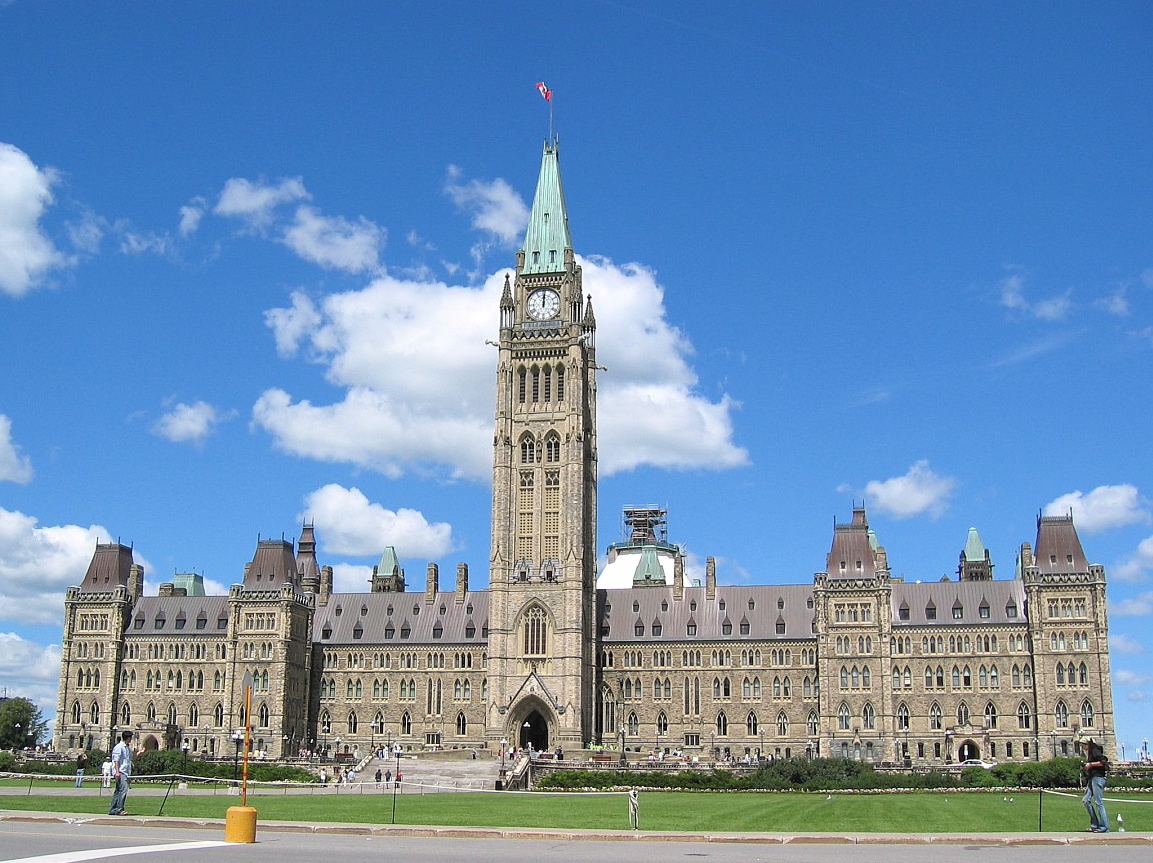
If you're thinking that you've seen something like this before, you probably have - it's similar in many ways to the Canadian Parliament building.   My other favorite aspect of this building - besides it's general fanciness - are the little details.  Like gargoyles (see right - click on it to enlarge)!  Also, that tower has a clock in it, which chimes the quarter-hours with a tinny bell - 2:30 just now; Daylight Savings did just flip today, so I suppose it's yet to be changed.

To get here I walked from the little traffic circle where I had lunch straight west on M St., passing by and stopping at the only Walgreens in the entire District of Columbia (!).  They did not, alas, have what I was looking for (Jiffy Pizza Crust mix - very popular in the Midwest, nonexistent out here) but they did have Cadbury bars on sale, 2 for $3, far cheaper than anywhere in Southwest.  And, as I have always maintained, it is better organized and more sensible than any CVS, even the new one at Waterfront.  I'm definitely coming back.  I'm also waiting for the execs at Walgreens to ask me to start an ad campaign for them.  :)

M St. in Georgetown is lined with shops - scads of them, of every imaginable sort, practically.  Clothes shops, restaurants, coffee shops, jewelers, shoe shops, pubs, ice cream shops, jewelers, bookstores - I even saw a gentleman's club!  I walked about ten block from the Walgreens, eying the shops but resolved not to spend anything, before I began to worry that I had missed Georgetown University, my eventual goal, altogether, perhaps passing it by, and that I would soon find myself in Maryland.  I scanned the skies for that iconic spire, and seeing nothing, turned north to climb up the hill on which Georgetown is perched, hoping that I would have a better view from up there.  On the way, I passed some of Georgetown's iconic rowhouses, the most fancy of which I had to photograph:
I was just beginning to lose hope when I spotted a dark, squarish tower over the roof-line of some of the charming row-houses.  "Aha" I thought, "that looks dated and institutional - Georgetown must be that way!"  Then I rounded a corner and saw this:
So I knew I was on the right track.  And I was right about the tower - it belongs to Georgetown's hideous library:
It was built in the 1970s, and it's even uglier that the library at UChicago, something I never thought I'd say.  I can only imagine whether it's more soul-crushing than the Regenstein, though...I suppose it's just as well that I went to Chicago and not Georgetown.  At least in terms of libraries, I wasn't missing out.

Now I'm going to head back east and maybe go to a museum - but who knows what else I'll discover on this weekend's adventure!

Sunday, November 7, 2010

Church Review: The Cathedral of St. Matthew the Apostle

Part 1 of an adventure begun today, backdated from Monday.

The Cathedral of St. Matthew the Apostle
1725 Rhode Island Ave., NW
Website
I have finally made it to the Cathedral, thanks to the federal government, which gave me (and you, if you're one of my readers living in the United States) an extra hour of sleep this morning.  Normally, I don't want to sacrifice my precious sleeping-time to trek all the way up here, but with an extra hour under my belt, I felt energetic enough to do it.  And am I glad I did!

To get here I took the Green line up to Chinatown and then transferred to the Red, since the Blue and Orange lines are on crack (read "being maintained") this weekend.  I got very lucky with both trains - a three minute wait at Waterfront and four minutes at Chinatown.  Interestingly enough, today I decided not to worry about making the trains; I just went.  Perhaps this means I should stop worrying about trains altogether?  Still, had the trains not cooperated I would have missed Mass; 4 on location for the days when Metro is feeling benevolent, and 3 on those days it isn't.

After a short walk up Connecticut Avenue and a right turn on Rhode Island (which, interestingly enough, is something one could actually do in Connecticut - make a right turn at Rhode Island), the first thing I saw was the hulking pile of red brick pictured above.  The only real clue that it's a church and not a fancifully-done gymnasium is the dome, and the single ornamentation on the facade - this mosaic (visible in the lower right of the picture above).  Upon arriving in front of the church the primary impression is one of tallness, not of beauty.  In fact, I remembering musing that it looked more like a church with its skin taken off - or unfinished - than what one would expect a cathedral to look like.  There is precedent for churches with unfinished facades - it happened a lot in Italy, where city-states or wealthy families would bite off more than they could chew and be unable to finish their cathedral/church (an example: this picture of San Lorenzo, the Medici family church in Florence, whose facade has never been completed).  But this doesn't usually happen in the United States - if a church project runs low on funds, you strip back the design rather than continue on the originally planned path until the money runs out.  This generally means lopping off towers...which was also the case in Strasbourg back in the Middle Ages.  The mosaic, however, is a hint: whatever the plainness of the cathedral's exterior may tell you, ignore it - when people starting dealing in mosaics, it means they aren't messing around.

See?

Inside the architects have made up for their outer frugality several times over.  Every single surface is decorated in some way, be it with marble, mosaic, glass, fine metalwork, painting (fresco?), carpet (yes, alas), or sculpture.  It is so much to take in that I scarcely know where to start.  Fortunately for you, I took lots of pictures, so I'll let them do most of the talking.

The Cathedral is actually relatively small - it is no longer than the Cathedral in Green Bay, where I once was an acolyte (but it is wider).  Like most cathedrals, it is cruciform (shaped like a cross - a Latin cross in this case), with the two transepts forming the shorter bar of the cross and the nave the longer bar.  This is the left transept:

Opposite it, in the right transept, is the organ (about which more will be said later):
(If you find the ceiling decorations reminding you of something, well done - it's mimicking the ceiling in St. Peter's Basilica in Rome.)

Where the transepts cross the nave (the technical word is "crossing" - not joking) is indisputably the best place to put a dome...

...and so the celebrant has something pretty to look at while he says Mass, the back of the church is also decorated sumptuously:
(Do you see that crimson blob on the left, in between the two hanging lanterns?  It's a cardinal's hat - the old-style one, called a galero - which I presume has been strung up from the cathedral ceiling in celebration of Archbishop Wuerl's impending reception of his own, about which I have already expressed my feelings.)

I have lots more picture but, at risk of extending this post to an absurd length, I'll save them for a rainy day.  Suffice it to say that this place is absolutely gorgeous, and fully deserves a 5 for Aesthetics.

You will doubtless have noted the presence of an organ, in the right transept (not in the choir loft, where it ought to be, but this is most likely because there isn't a choir loft, so I suppose I'll forgive the powers that be their less-than-ideal placement of the organ).  What this means, however, is that the sound is projected across the transepts, not down the nave to the altar, so if you're not in the transepts or the crossing, the sound is muddy and unclear (it's probably pretty bad on the altar, too - sometimes even if the sound is good in the rest of the church it's bad near the altar).  The organist seemed moderately skilled, although he left the cantor (who didn't enunciate enough) and the congregation (which was timid) behind on a few occasions.  I was beginning to contemplate awarding a 3 for music, but then the organist had the last laugh: the postlude was Aaron Copland's "Fanfare for the Common Man," which sounds surprisingly good on an organ.  Well played, sir - have a 4.

The most unique part of this experience, of course, was the liturgy, since this was a Latin Mass (the sermon was safe and forgettable).  Not a Tridentine (pre-Vatican II) Mass, mind, but the Latin language version (technically the original, rather than a version) of the Mass, commonly referred to as the Novus Ordo (New Order, but you knew that).  Very kindly, the Cathedral provided handbooks for the Ordo Missae (Order of the Mass, which you also knew, surely) alongside the hymnals, for which I was grateful, since I don't know the Novus Ordo anywhere near the level I would need to to sing it unaided.

That's right, sing it.  The Missa Novus Ordo is primarily sung, both by the celebrant and the congregation, so the youngest of the three (!) celebrants, who cannot have been older than 30, got to do the singing bit (you can hear the pope do it whenever Masses are broadcast from the Vatican - Christmas Eve Mass, for example, is usually carried on EWTN live, so when it's midnight in Rome you can sit down after dinner in the Midwest and listen to the pope's quavering voice sing the celebrant's parts of the Missa Novus Ordo - add that to your calendar).  It is chant, much of it centuries old, and written in Gregorian notation (see the picture).  I have only passing familiarity with Gregorian notation, since the only place it's used any longer is churches where Masses are sung in Latin, which are not commonplace in the Midwest (this sort of thing gets more play on the East Coast, where the Catholics are generally more conservative than those in the Midwest).  Of course, I'm also not used to singing some of the longer prayers in Latin (Agnus Dei is one thing, and it's only three lines, but the Confiteor takes up two and a half pages!).  It's entirely possible to get distracted by the unfamiliar text and mess up the chant, or focus on the chant so intently that you end up neglecting the text, producing beautifully-chanted schwas.  There is no denying that chanting the Mass in Latin feels more mystic and formal, but it's disjointing if you aren't used to it.  3 because I keep tripping up - 4 once I've learned it.

Summary
Location: 3 / 4 (3.5)
Aesthetics: 5
Music: 4
Liturgy: 3 / 4 (3.5)
16/20 (4)

A good rating, an average of 4 (though, depending on other factors, it could slip to 3.75 or rise to 4.25), bit there are signs here of some of the less pleasant aspects of the Church's doings.  For example, the homilist (the eldest of the three celebrants) felt compelled to mention, although it was by no means integral to his homily, that when God created marriage (ahem), he created it between a man and a woman (I have plenty of counterarguments to both points of this statement, but I'll refrain from haranguing and merely note that I disagree), which is quite in line with Cardinal-designate Wuerl's stance on the matter.  Furthermore, at the end of the Mass the baby-faced celebrant introduced the middle-aged celebrant as a deacon from San Antonio, who was there with students from his school.  An Anglican school, because (as Babyface explained), Cardinal-designate Wuerl is the pope's liaison with those American Anglicans who wish to come more fully into communion with the church.  In other words, not only is the not-yet-cardinal one of Washington's biggest homophobes, but he's also His Holiness's hatchet-man vis a vis the Anglican community.  I don't even know the guy and I detest him.

What I'm trying to say in a roundabout and highly sarcastic way is that although I liked Mass at the Cathedral - liked, not loved - I'm not exactly comfortable with one of the celebrants who may turn up (I'm glad I didn't end up going to the Red Mass, as I read later that it was something of a pro-life tirade, which is why Justice Ginsburg no longer attends the Red Mass).  While I may return to familiarize myself with the Latin and hear the choir, which was off this week, I'm pretty sure - no, certain - that St. Matthew the Apostle is not my religious home.

Friday, November 5, 2010

Mini-Adventure

This afternoon I decided to walk home from work, since the sun was out and it seemed like a relatively nice day, which would be a first for this week, which has been rainy and cold (and it was cold when the sun went and hid itself under a cloud nonetheless).  On my way home I passed Smithsonian Castle and, seeing a bit of a garden behind it, thought I would go see what it was.
It turns out this is the Enid A. Haupt Garden, and it covers over four acres, sandwiched in between the Smithsonian Castle (the iconic red building in the background) and Independence Avenue.  The garden is divided into several sections, one centered around a fountain, one inspired by the gardens of China, and one (through which you approach the castle from Independence Ave.), a Victorian formal garden, complete with topiary:
Across the street you can see the monstrous (both in size and aesthetic) hulk of the Department of Energy; in the foreground, the formal garden.  I learned from one of the signs that this is technically a rooftop garden.  As the garden's website puts it:
While wandering its brick paths, admiring the parterre and hanging baskets, or splashing in the fountains, few visitors to the Haupt garden realize that they are standing on the roofs of the National Museum of African Art,  the Arthur M. Sackler Gallery, and the S. Dillon Ripley Center (International Gallery).
Indeed!
After perusing the remaining flowers, I walked over towards a building that, earlier, I had noted was closed for renovations, following the path above (that odd shadow on the path is actually a palm tree - they're more resilient than you think.  They grow in Scotland too, you know.)  The building in question is the Arts and Industries building, and can be seen in the background - I followed it along towards the right, where I saw a sign informing me of what I already knew - that it was being renovated.  So I took a picture:
Not too bad for a cell phone, eh?  Underneath that central arch is an entrance to the building (closed, of course), which possessed and interesting set of cast-iron gates.  As readers of this blog may have noticed, I have something of an obsession with cast iron architectural features, especially ornate lamps and gates.  So, a picture of the gate:
Neat old wooden doors too.

After snapping a few pictures, I continued on my way home, which meant crossing Independence Ave.  You may or may not have noticed in the picture of the formal garden that the Energy building (the monstrosity in the background - Brutalism at its worst) is on stilts.  This means you can walk under it.  You can also drive under it.  On a road.  Once you get to the other side, this is what it looks like:
Might we be in East Berlin?  I think so.

This is L'Enfant Promenade, part of a massive complex referred to as L'Enfant Plaza; both are named after Pierre Charles L'Enfant, who drew up the original blueprint for the city of Washington (it was not followed in its totality, but L'Enfant is most definitely to blame for the District's periodic diagonal streets).  L'Enfant Plaza is mostly office towers, although there is apparently an underground mall as well.  Even during the day, the area feels dead - at night it's so quiet it's been nicknamed the Valley of the Tombs.  I prefer to think of it as my own personal trip behind the Iron Curtain.  (For more about L'Enfant Plaza, go here.)

Speaking of dead things, guess what this is!
If you guessed "the headquarters of the US Postal Service," you'd be right!  Seems appropriate that it's located in the "Valley of the Tombs," no?

Thursday, October 28, 2010

Adams Morgan

Part 3 of the adventure which began on Sunday, backdated from a few days later.

Adams Morgan, 2:30pm

I've walked from DuPont Circle, the heart of the neighborhood of the same name, to the corner of Columbia Road and 18th, the heart of Adams Morgan (no hyphen between those words, although I want to insert one).  It's not hard to get here; from the Circle walk north up Connecticut Avenue, and then veer right at the statue of General McLellan.
Veering left keeps you on Connecticut and will take you to Woodley Park; veering right brings you onto Columbia Road.  You can follow it all the way to the heart of Adams Morgan where I'm sitting now, and view all the sumptuous apartment buildings along the way.  Here are some of my favorites:
Look at this portal - isn't it great?  Of course, I could never afford to live here - it's condominiums, which sell for quite a hefty bit, according to the website.  Nevertheless, could I just note that the 24-hour front desk, "a rare find in DC" according to whoever wrote this website, is something that I enjoy at my humble abode in Southwest?  Suck it, Wyoming!

Don't think too hard, just look - arches, a terrace with window-boxes, a noble-looking seal, a roof garden with palm-ish looking plants, columns - might we be in Europe?  Might we be in an old palazzo in Rome?  Ah yes...
I like this portal too, but I was drawn to it by the lamps on either side of the door - look at those things!  I love wrought-iron lamps, lanterns, streetlights, and so on, but you could kill someone with these particular specimens.  I don't think I've seen spikes like that since I was in the torture chamber at Prague Castle.  Also, pumpkin!

This is Columbia Road, lined with gorgeous apartment buildings in which the rent is surely more than I make each month - before taxes.  But they are lovely, on the outside for sure, and most likely on the inside as well.

Once you pass the rows of fancy facades, you're in Adams Morgan's beating heart.  Adams Morgan is very young, very hip, and very ethnically diverse, and Columbia Road is lined with bistros, bars, restaurants, and shops of all sorts (one in particular made me grin, as it was called the Grill from Ipanema).  I am told that one weekend nights this area is also filled with the young and the "restless" (if you get my meaning), but since I haven't had any desire to be the target of a random stranger's alcohol-soaked libido I haven't ventured up on a weekend night, but rather a quiet Sunday afternoon.  And it's very quiet, which may be Nature's way of balancing out for all the noise unleashed last night - or maybe not.  Unless I summon up the courage to come up here some Friday or Saturday night, I'll never know.  Now my curiosity is piqued...


I nearly lived here, in the building across the street from where I sit (above) but although the neighborhood is lovely and the profusion of shops and entertainment venues enivable, I'm glad I didn't end up here for a number of reasons.  For one, there's no convenient Metro station here, and it's not close enough to work that I could walk, so transportation would have been a pain.  For another - and I share this concern with DuPont Circle - all the cafes and restaurants and bookstores and boutiques would present a temptation that my budget simply can't handle.  I impulse-bought two books in DuPont earlier ($8 a piece, so I figured I wasn't being that extravagant), but I know that living near all these opportunities to spend money would either bust my budget or, if I managed to remain aloof, make me feel like I was missing out.  There aren't those sorts of things in Southwest (dull but safe for the tight-budgeted); in this case, out of sight is out of mind.

I do have one more objection to Adams Morgan.  There are too many pigeons.
They're watching you...

Monday, October 25, 2010

DuPont Circle

Part 2 of an adventure which began on Sunday, backdated from a few days later.

DuPont Circle, 1:00pm (cont.)
The phrase "DuPont Circle" refers to one of three things: the neighborhood between Adams Morgan and Foggy Bottom, the Metro station which services it, and the traffic circle after which both are named.  I'm in the actual circle, sitting on a bench (as noted earlier) digesting my lunch.  I'm also people-watching.  It's a habit I learned from my father, although I'm tempted to call it a skill; it takes more than simply passivity to observe the world around you.

The Circle is an interesting place to observe people.  DuPont is a pretty tony neighborhood, an apartments here aren't cheap.  This is the sort of place that young people like me aspire to live in, and by the time we can actually afford it, we're no longer young.  Yet alongside the well-off not-so-young urban professionals who walk through the Circle, Starbucks in hand (or, it being a weekend, who jog through the Circle, earbuds firmly inserted) are families playing ball on the grass, students picnicking, people walking and grooming their dogs, and tourists (or maybe natives - can't tell from this distance) lounging about around the fountain (above, with people and below, with pigeons).
But also meandering about this circle of grass enclosed in a ring of concrete are the homeless men, some sitting alone, some asleep, some whiling away their time playing chess at the tables, and some wandering aimlessly about.  All are black, save one who sits at a table and talks incoherently to the air.  It is interesting that amidst the undisputed affluence of DuPont Circle is an element of poverty, and not the "just-getting-by" sort of poverty, but the grinding poverty of the homeless, the mentally ill, and the dispossessed.  For someone from the well-heeled Midwest, where the poor are kept out of sight, it gives pause (my first exposure to this sort of poverty was in Chicago, but it is even more present here). 

I shouldn't be that surprised, I suppose, since Washington has a rather troubled past.  As little as ten years ago my waterfront neighborhood was a no-go zone, and fifty years before that, it was a crowded, disorganized slum (perhaps a bit strong, but they did raze the area in the 50s for a reason - this author is of the opinion that it was a horrible mistake*).  A slum from which, if you looked the right way, you could see the U.S. Capitol.  The homeless men in the Circle may not be able to see the Capitol, but they could walk there from here.  I wonder if anyone there would do anything for them?  Some things change, some things change only on the surface, and some things always remain the same.

* I should note, for the purposes of clarity, that the Waterside Mall the author mentions has since been torn down and the area redeveloped into a sleek complex of office towers, one of which, I am told, will soon house the Mayor's office, and the glitzy new Safeway I shop at every week.  Redevelopment isn't all bad, you see.

Sunday, October 24, 2010

Return to St. Stephen & a Haircut from the Mafia

Part 1 of an adventure begun on October 24th, backdated from a week later

DuPont Circle, 1:00pm

I'm sitting on a bench in DuPont Circle - in it; the actual circle is a park - where I've just finished my lunch. Now, while I let my food settle, I'll take some time to write, people-watch, and report on this month's adventure so far.

I had intended, as I often do, to go to the 10am Latin Mass at the Cathedral this morning, but as has always been the case, decided that I didn't want to get up at 8:00am to catch the [annoyingly infrequent] Metro up. One of these days I'll actually do it - perhaps not after a night spent up late doing, of all things, chores. [Incidentally, I just found out yesterday that the archbishop of Washington, Donald Wuerl (pronounced "whirl") - remember him? The one who ended the archdiocese's adoption programs because DC legalized same-sex marriage? - has just been awarded a cardinal's hat. I'm not making excuses for this one.]

In any case, I went back to St. Stephen Martyr, because it's close to a branch of the salon where I got my hair cut last month and I needed another trim (I promise it's not as trippy as the website would suggest). St. Stephen, it turns out, has barely changed: the same languid cantor, the same hymns - I swear, if I hear "Eat This Bread" used at communion one more time I'm going to break something - different priest but same sort of forgettable sermon; in fact, I've forgotten it already. It may be the best plainsong in town (although I'll bet I can find better), but I don't intend to make this a regular thing.

After Mass I went to find the salon and discovered it closed, much to my disappointment (I understand that stylists need a day of rest too, but could it please not be one of the two days when all the rest of us actually have time to get our hair cut?), so I wandered up 19th St., resolving myself to no haircut and intending to skip ahead to the next step - the eating of lunch. But as I walked along, through a neighborhood of glitzy office towers with little lunch places on the first floor - all closed since it's Sunday - I kept my eyes peeled (ew) for a stylist. Then I spotted one, nestled in between a restaurant and a row house, with a bar in the basement. It was in one of those tall brick row houses that used to dominate the area, a bit crumbly around the edges. I climbed the stairs to the first floor (basements here are not real basements, they are English, which means fake or only half-submerged, depending on your dialect) and peered inside to case the joint and all of a sudden it was 1920. See?
Not my picture - I stole it from their website, although the Christmas decorations were not in place, for obvious reasons.  (Warning - this sit has music on it, so once you get there scroll down and turn it off if ambient website music bothers you as much as it bother me.
The salon, called Daniel's, has high ceilings and hardwood floors and high ceilings, dark wood walls with mirrors and old-style lamps hanging down and emitting golden light. After determining that a haircut here would set me back no farther than what I had originally intended to spend, I was handed over to an old Italian gentleman who assessed my hair ("eet ees verra straight, your hair") and gave me a good, clean haircut using a real razor, and wanted to know if I going to watch "da game" (Redskins vs. Bears; probably not). All around me I heard more Italian accents and wondered if perhaps I had stepped into mafia front, in the best way possible. "You go to school here?" my stylist asked. No, I told him, I came here for work. "You'll like da city," he assured me genially and clipped away. His next appointment, a boy in his mid- to late teens, came in and they greeted each other. "Where's your father?" the stylist asked, running a razor up the back of my neck. "Parking the car," the boy replied. "OK," the old man answered. "Go upstairs and get your hair washed." It felt like I had stumbled into the neighborhood barbershop from a mafia movie.

Of course, it wasn't, and this wasn't even close to the Italian church (Holy Rosary, on the other side of Chinatown, which I intend to attend at some point - maybe even one of the Italian-language masses), and when the stylist gave me his card, I discovered his name was Simon. I was kind of hoping it would be Beppe.

********
UPDATE (November 8th): In the course of my November 7th, I stumbled across Daniel's again, and got a picture of the outside - in a crumbling rowhouse, like I promised:
Daniel's is the one with all the green awnings.  A hole in the wall, really - but a cozy, Italian hole in the wall!

Tuesday, September 28, 2010

The Korean War Memorial

Part 3 of my adventure which began on Sunday.  Backdated from a week later because I'm still a bad person.

The Korean War Memorial, 2:00pm

We forget that there was more to the Fifties than Eisenhower, big cars, drive-ins, and sock-hops.  From 1950 to 1953, we were also in a war.  It's a war no one remembers, but it's also a war which is technically still going on today, since North and South Korea never signed an armistice.  A thin strip of demilitarized wasteland runs across the peninsula, separating two countries which, today, are as different as night and day.  At the time of the war, however, they must not have been quite so different.
Unpleasant statistic, isn't it.

It was not a particularly glorious war for the United States and its allies from the UN, and it is not memorialized in a particularly glorious fashion.  The memorial, while it is undoubtedly meaningful for people who were affected by the Korean War, is not stupendous.  For one, I suspect that it could fit inside the Lincoln Memorial with room to spare on either side, but more importantly, it tries to be too many things at once - reflecting pool, statuary garden, memorial wall, and park, all at once.

 
Here you can see all but the pool, which is behind me and to the left.  Also to the left, but further up, is the flag pole (feature #5) and this:
It reads "Our nation honors her sons and daughters who answered the call to defend a country they never knew and a people they never met."

Now, I appreciate the poetic sentiment - "a country they never knew and a people they never met" is a great turn of phrase, sure - but I object to the actual sentiment.  I can understand that these men and women - American soldiers and service-people - didn't know the country and didn't get to know it (in the sense of becoming familiar with it) because they were killed, but are we really to believe that all of the Americans who died in Korea did so with such rapidity that they never met a single Korean?  I think this bothers me because by this logic - or implication, perhaps - the Koreans become faceless and without identity.  They also become passive and non-participatory, which is bogus, since South Korea deployed troops of its own, and surely the Americans encountered them, even if they didn't encounter civilians.  I don't trust M*A*S*H as a historical source, but there are encounters between Koreans and Americans depicted there, and I refuse to believe that were fabricated out of thin air, since the author of the book (which inspired the film and the television series) was in fact a doctor in Korea during the war.

In any case, between the plaques, statues, wall, pool, flag pole, shrubs, and strategically placed trees and benches, the energy of the memorial feels diffused.  The individuals components, taken on their own, are fine.  Some are quite poignant:
These are photographs of some of the Americans who died in Korea, etched into granite.  What makes this picture work for me, though, is the reflections of the living people passing by visible alongside those who have passed on.  This part of the memorial works, and the pool is nice on its own, too.  But the elements are too disparate, the energy too diffused, and it doesn't pull into a cohesive whole.  Perhaps this is appropriate, since the Korean War was a conflict which solved nothing, maintained the status quo, but failed to do more because of catastrophic miscalculation; had UN troops just defended rather than going well beyond South Korea's borders to China (almost), it seems doubtful that the Chinese would have entered the conflict and thrown the UN forces all the way back to the present border and thereby assured that nothing would change on the peninsula.  For a country which still remembered its decisive victories in the Second World War it was probably frustrating.  Appropriately - and perhaps tragically - the memorial is too.

Monday, September 27, 2010

The Lincoln Memorial

Part 2 of the adventure which began below.  Backdated from a week later, because I'm a bad person.

The Lincoln Memorial, 1:20pm


I have come to the Lincoln Memorial, although I have been here once before (briefly, when I was in the city two years ago) not because it lies on my path home - it doesn't, really - but because I like it.  I have great trouble conjuring up any sort of emotional reaction to the Washington Monument, even if it is the world's tallest phallus - I mean, obelisk - but Lincoln is another thing entirely.  Perhaps it is appropriate, then, that as I sit on the steps and write, the sun has come out properly for the first time today.

I also came to see the people.  These are not the swelling amusement-park throngs, and neither are they the emotional mobs who periodically hold rallies here or in the vicinity.  The memorial is a bit out of the way for those going to see the Capitol and the White House, and since it's at the far end of the Mall, it's not something you just stumble across on your way somewhere else.  No, these people are here to see Lincoln.
There is not, to my knowledge, any larger rendering of a human being in this city of larger-than-life figures, but almost as large as Lincoln himself (figuratively speaking) are his words, which flank visitors who enter: the Gettysburg Address, carved in marble on Lincoln's right, and his Second Inaugural Address, ditto on the left.  Some of the people take pictures of Lincoln and then step out to admire the view of the Washington Monument from the other end of the Reflecting Pool, but others step into these two wings which in a religious structure would be chapels and read the words of a man who is as close to a prophet in American mythology as one could possibly be.  But everyone, even the people who come to snap a photo and then leave, is quiet - not silent, of course - but muted, perhaps out of respect, perhaps from awe, or perhaps in deference to Lincoln, for whatever the deficiencies of American popular knowledge, everyone knows who Lincoln is.

No one thinks of the Lincoln Memorial as being particularly ornate, since our common perception is formed by the rather stripped-down versions visible on the back of the penny and the five-dollar bill, but in fact there is some lovely art here.
Even those who don't speak English know him, it turns out.  I have heard languages I can't name on the streets of the District, and this is true at the memorial too.  As I exited I passed several women in saris, some punks with pierced noses, ears, and God knows what else, and numerous others who don't fit the corn-fed, white-bread stereotype.  They were all respectful, if not religiously so.  I suspect that most of us would be when faced with something which, as amorphous as its symbolism may be, is indisputably the representation of something far larger than ourselves.

Enough writing - I need my lunch.  Away from the monument I can find some place to unpack my picnic.  And of course, I can come back here whenever I want.  Appropriately enough, this temple to American idealism is open twenty-four hours a day.
Remember this from high school?